

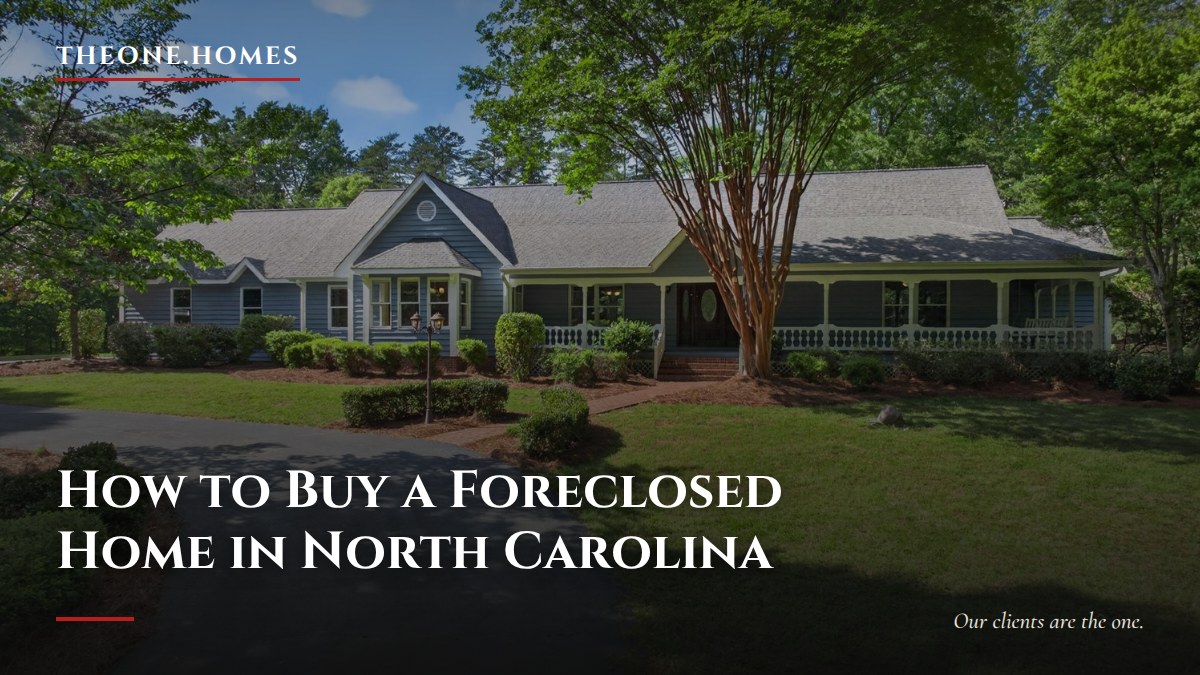
how to buy a foreclosed home in north carolina
Foreclosures can serve as opportunities for home ownership. However, to navigate the risks and requirements it is essential to know the steps of how to buy a foreclosed home in North Carolina and work with an experienced real estate agent partner to achieve the best outcome.
Buying a foreclosed home in North Carolina can be an excellent opportunity to purchase a property below market value while building equity more quickly than with a traditional home purchase. Throughout the Piedmont and Triad regions; including Greensboro, Winston-Salem, High Point, Burlington, Lexington, Asheboro, and surrounding communities, foreclosed properties periodically become available through lenders, government agencies, and foreclosure auctions.
However, purchasing a foreclosure may be considerably different from buying a traditional home. Buyers often face unique legal requirements, limited property disclosures, stricter timelines, and increased financial risks. Understanding the foreclosure process and working with an experienced real estate professional who understands North Carolina foreclosure transactions can help minimize risk and maximize your investment. Relying solely on your own knowledge and intuition may lead to unpleasant surprises and very unfavorable results.
Steps For Buying a Foreclosed Home in North Carolina
Step 1: Partner With an Experienced Foreclosure Real Estate Agent
Description: Begin by selecting a real estate agent who has experience helping buyers purchase foreclosed homes in the Piedmont and Triad markets.
Why It Is Important: Foreclosure transactions involve unique procedures, legal deadlines, pricing strategies, and negotiation techniques that differ from traditional home purchases.
Potential Challenges: Many foreclosed homes receive multiple offers or are sold under strict lender requirements.
Legal Considerations: Your agent should understand North Carolina real estate law, foreclosure procedures, due diligence requirements, and local market conditions.
Step 2: Determine Your Budget and Financing
Description: Meet with a lender to determine your purchasing power and obtain mortgage pre-approval before searching for properties.
Why It Is Important: Many lenders and banks selling foreclosed homes require proof that buyers can complete the purchase.
Potential Challenges: Some foreclosed properties require renovation financing or may not qualify for certain government-backed loan programs because of property condition.
Legal Considerations: Buyers using financing must satisfy all lender underwriting requirements before closing.
Step 3: Search for Suitable Foreclosed Properties
Description: Work with your agent to identify lender-owned (REO), HUD-owned, VA-owned, USDA-owned, or foreclosure auction properties that match your goals.
Why It Is Important: Different foreclosure types have different purchasing procedures, timelines, and opportunities.
Potential Challenges: Inventory may be limited in highly desirable Piedmont and Triad neighborhoods.
Legal Considerations: Property ownership and sale authority should always be verified before submitting offers.
Step 4: Research the Property Thoroughly
Description: Investigate the property’s condition, ownership history, neighborhood values, tax records, and any recorded liens.
Why It Is Important: Many foreclosed homes are sold “as-is,” meaning buyers assume responsibility for existing conditions after closing.
Potential Challenges: Deferred maintenance, vandalism, vacancy damage, or title issues may increase future costs.
Legal Considerations: North Carolina’s “buyer beware” (caveat emptor) principles make careful due diligence particularly important.
Step 5: Conduct Inspections Whenever Possible
Description: Arrange professional inspections before finalizing the purchase whenever inspections are permitted.
Why It Is Important: Inspections identify structural, electrical, plumbing, roofing, HVAC, foundation, moisture, and safety concerns.
Potential Challenges: Some foreclosure auctions do not permit inspections before purchase.
Legal Considerations: Inspection rights depend upon the transaction type and purchase contract.
Step 6: Submit a Competitive Offer
Description: Prepare an offer that reflects current market conditions, property conditions, estimated repair costs, and comparable sales.
Why It Is Important: Proper pricing helps buyers remain competitive while protecting their investment.
Potential Challenges: Banks often receive multiple offers and generally sell properties with limited negotiation flexibility.
Legal Considerations: Standard North Carolina purchase contracts, including Due Diligence and Earnest Money provisions, frequently apply to lender-owned properties.
Step 7: Complete Due Diligence
Description: Finalize inspections, financing, title review, insurance, and any additional evaluations during the Due Diligence Period.
Why It Is Important: This is your opportunity to identify significant concerns before becoming fully committed to the purchase.
Potential Challenges: Foreclosed homes frequently require more extensive investigation than traditional listings.
Legal Considerations: North Carolina’s Due Diligence Fee is unique among many states and is generally non-refundable if the buyer terminates the contract.
Step 8: Close on the Property
Description: Complete financing, review closing documents, transfer funds, and receive ownership of the property.
Why It Is Important: Proper closing ensures legal ownership transfers free of unexpected complications.
Potential Challenges: Last-minute title issues, lender documentation, or repair negotiations may delay closing.
Legal Considerations: North Carolina requires a licensed closing attorney to oversee residential real estate closings.
How to Ensure a Successful Foreclosure Purchase in NC
Purchasing a foreclosed home requires careful planning, patience, and expert guidance. The following best practices can significantly improve your chances of success.
- Partner with the Best Real Estate Agent or Agency for Your Location
Choose a professional experienced in foreclosure transactions throughout the Piedmont and Triad regions of North Carolina. An experienced agent understands lender procedures, foreclosure inventory, pricing strategies, local neighborhoods, and negotiation techniques that can save buyers thousands of dollars while reducing risk. - Obtain Mortgage Pre-Approval Before Shopping
Strong financing demonstrates credibility and allows you to move quickly when desirable properties become available. - Understand North Carolina’s Foreclosure and Due Diligence Process
Familiarize yourself with Due Diligence Fees, Earnest Money Deposits, upset bid periods for foreclosure sales, attorney requirements, and closing procedures before submitting offers. - Research Every Property Carefully
Review comparable sales, neighborhood trends, tax records, HOA obligations, title history, and estimated repair costs before making purchasing decisions. - Budget for Repairs and Unexpected Expenses
Most foreclosed homes require at least some repairs or improvements. Maintain a financial reserve to address maintenance, renovations, or unforeseen issues after closing. - Never Skip Professional Inspections When Available
A thorough inspection can uncover costly structural, mechanical, electrical, plumbing, or environmental issues that are not immediately visible. - Verify Title Status
Ensure a complete title search is conducted to identify any liens, judgments, easements, or ownership concerns before closing. - Remain Patient and Flexible
Foreclosure transactions often involve longer response times, additional documentation, and stricter lender procedures than traditional home purchases. - Work With Experienced Local Professionals
Coordinate closely with your lender, closing attorney, home inspector, insurance provider, and real estate agent to ensure every aspect of the transaction proceeds smoothly.
The best agents emphasize a personalized, white-glove service approach designed to guide buyers through every phase of the home-buying process. Their knowledge of the Piedmont and Triad real estate markets, combined with local expertise and professional representation, can help buyers confidently navigate the complexities of purchasing foreclosed homes while minimizing risk and maximizing long-term value. Buying a foreclosed home in North Carolina can provide outstanding opportunities for homeownership and investment when approached strategically. However, foreclosure purchases require significantly more preparation, research, and professional guidance than traditional real estate transactions.
At TheOne.Homes, focus is simple: expert guidance, honest advice, and a true 5-star experience. In today’s competitive market, working with an experienced agent who understands how to buy a foreclosed home in North Carolina is a significant key that will determine the success of your real estate transaction. To learn more, contact me.

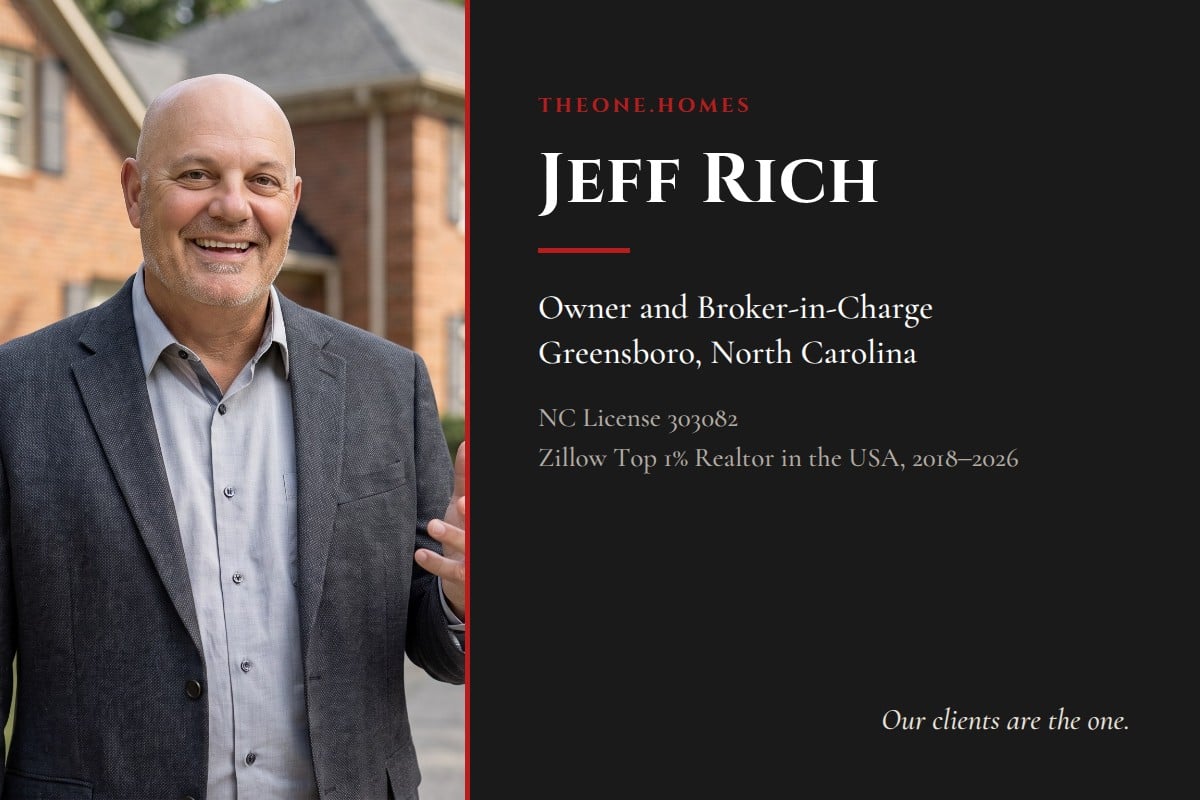
TheOne.Homes is owned and operated by Jeff Rich, a real estate industry expert.
- Jeff has been ranked in the top 1% of Realtors in the US by Zillow.
- The Agency is consistently ranked 5/5 for exceptional service since it’s inception.