

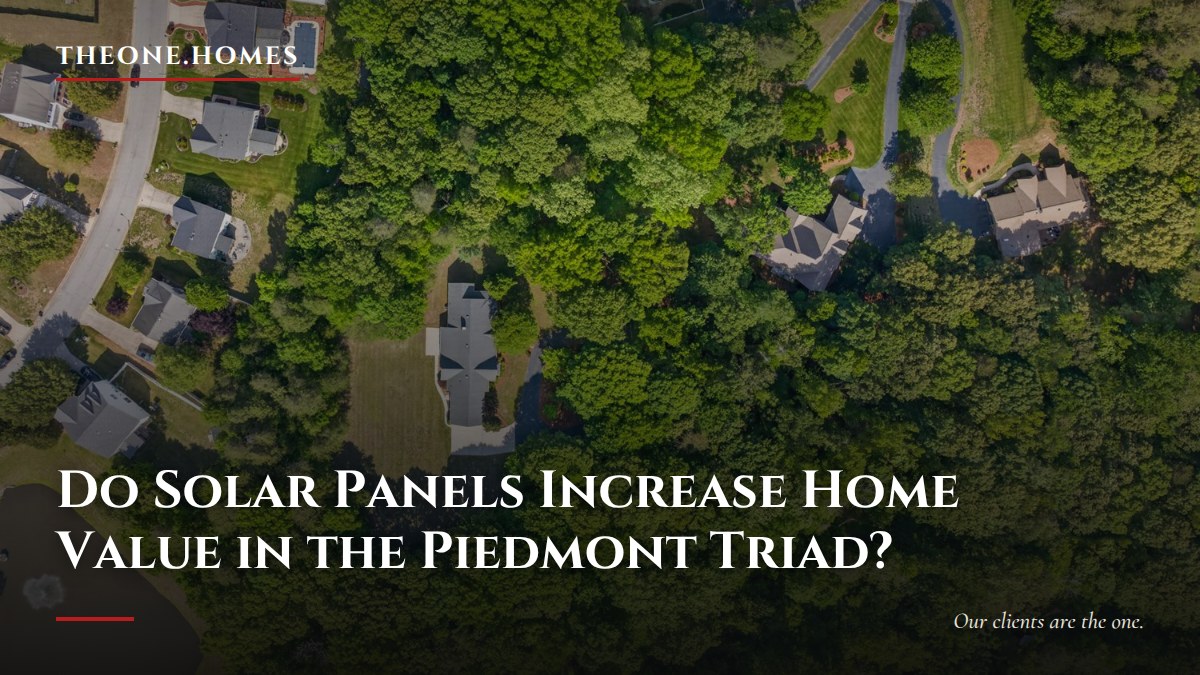
do solar panels increase home value in the piedmont triad?

A common question asked by current and potential homeowners is “Do solar panels increase home value in the Piedmont Triad?” The degree of benefit from this home addition is proportional to your knowledge of the pros and cons and implementation of best practices; including seeking guidance from an experienced real estate agent with local area expertise.
As energy costs continue to fluctuate and homeowners seek greater long-term savings, residential solar power has become an increasingly popular home improvement throughout North Carolina’s Piedmont Triad. Communities such as Greensboro, Winston-Salem, High Point, Burlington, Lexington, Kernersville, and surrounding areas receive ample sunlight to make solar energy a practical investment for many homeowners.
One of the most common questions homeowners ask is whether installing solar panels actually increases the value of their home. The answer is generally yes. Provided the system is properly designed, professionally installed, and appropriate for the local market. Beyond reducing monthly utility expenses, solar panels may make a property more attractive to buyers who value energy efficiency, sustainability, and predictable operating costs. However, homeowners should also understand the upfront investment, financing options, and local market considerations before making a decision.
Residential Solar Panels: Pros and Cons
Installing residential solar panels offers numerous advantages, but homeowners should carefully weigh both the benefits and potential drawbacks.
Advantages
- Lower Monthly Electric Bills
Solar panels generate electricity from sunlight, reducing the amount of electricity purchased from the utility company. Many Piedmont Triad homeowners experience substantial monthly savings, while some systems may offset nearly all annual electricity usage depending on system size and household consumption. - Long-Term Financial Savings
Over the life of the system, electricity savings often exceed the initial installation cost, particularly as utility rates continue to increase. - Federal Tax Credits and Government Incentives
Qualified homeowners may be eligible for the federal Residential Clean Energy Credit, which currently allows a percentage of qualified installation costs to be claimed as a federal income tax credit (subject to IRS rules and eligibility). Depending on utility providers and timing, additional incentives or rebate programs may also be available. - Reduced Environmental Impact
Solar energy reduces dependence on fossil fuels while lowering greenhouse gas emissions, making it an attractive option for environmentally conscious homeowners. - Greater Energy Independence
Solar panels, particularly when paired with battery storage, provide greater resilience during utility outages and reduce exposure to rising energy prices.
Disadvantages
- High Upfront Installation Costs
A professionally installed residential solar system typically costs between $15,000 and $35,000 before incentives, depending on system size, roof configuration, and battery storage. - Roof Suitability Requirements
Older roofs or roofs with significant shading from mature trees may reduce system performance or require roof replacement before installation. - Maintenance and Equipment Replacement
Although maintenance requirements are generally modest, inverters and certain system components may eventually require replacement. - Financing Considerations
Solar leases or power purchase agreements (PPAs) may complicate future home sales because buyers must often assume or satisfy the existing agreement. - Variable Financial Return
Actual savings depend on electricity usage, local utility rates, available incentives, financing terms, and system performance.
How Solar Panels Influence Home Value
Solar panels affect home value through several financial and market factors.
Owned Versus Leased Systems
Homes with owned solar systems generally command stronger buyer interest because the buyer receives the benefit of lower utility costs without assuming a lease obligation. In contrast, leased systems or PPAs may require additional paperwork and buyer approval before closing, potentially limiting the pool of interested purchasers.
Grid-Tied Solar Systems
Grid-connected systems remain the most common residential installation in North Carolina. These systems allow homeowners to use solar-generated electricity while drawing power from the electrical grid when needed. Buyers often appreciate the predictable reduction in monthly operating expenses.
Solar Systems with Battery Storage
Battery backup systems provide additional value by allowing homeowners to maintain essential electrical service during power outages. While batteries increase installation costs, they also enhance energy independence and may appeal to buyers seeking greater resilience.
Property Tax Considerations
North Carolina provides a property tax exclusion for certain renewable energy systems, meaning much of the added value from a qualifying solar energy system may not increase a homeowner’s local property tax assessment. Homeowners should verify current eligibility requirements with their county tax office, as program details and qualifications may change.
Home Sale Impact
Homes with professionally installed, well-maintained, owned solar systems often attract buyers seeking lower monthly housing costs. Reduced utility expenses, modern energy-efficient features, and environmental benefits may improve marketability, shorten time on market, and support stronger selling prices—particularly in neighborhoods where buyers place a premium on sustainability and operating cost savings.
However, solar panels alone do not guarantee a higher selling price. Overall property condition, location, school districts, neighborhood demand, and comparable sales continue to be the primary drivers of residential value.
Do Solar Panels Increase Home Value in the Piedmont Triad?
For many homeowners, the answer is yes, especially when solar panels are installed as part of a broader strategy to improve overall property value. The following best practices can help maximize both financial returns and future resale value.
- Consult an Experienced Local Real Estate Professional Before Installation
A knowledgeable Piedmont Triad real estate agent can determine whether solar panels are likely to add value in your specific neighborhood, recommend improvements buyers value most, and help you avoid investing in features that may exceed local market expectations. - Purchase Rather Than Lease the Solar System
Owned systems generally provide greater resale appeal because buyers immediately benefit from reduced energy costs without assuming existing lease obligations. - Select High-Quality Equipment and Certified Installers
Professionally installed systems with transferable warranties, documented maintenance records, and reputable manufacturers inspire greater buyer confidence. - Maximize Available Federal Incentives
Take advantage of applicable federal tax credits and available utility incentives to reduce installation costs and improve long-term return on investment. - Pair Solar Panels with Other High-ROI Improvements
Combining solar panels with energy-efficient windows, upgraded insulation, HVAC improvements, modern kitchens, or enhanced curb appeal often produces stronger overall increases in property value than any single improvement alone. - Maintain Complete Documentation
Keep permits, warranty information, inspection reports, maintenance records, and utility savings documentation readily available. Buyers appreciate clear evidence of system quality and financial performance. - Monitor Local Market Trends
Buyer demand for energy-efficient homes continues to evolve. A local real estate professional can help determine the most advantageous time to sell based on neighborhood conditions and current market preferences.
Solar panels can be an excellent investment for homeowners throughout North Carolina’s Piedmont Triad, offering both immediate utility savings and potential long-term increases in home value. While installation costs remain significant, federal tax incentives, lower monthly electric bills, greater energy independence, and improved buyer appeal often make solar energy a financially attractive improvement.
At TheOne.Homes, focus is simple: expert guidance, honest advice, and a true 5-star experience. In the present competitive market, answering questions like “Do solar panels increase home value in the Piedmont Triad” can have a marked impact on short-term costs and the long-term capital gain benefits of your property. Choosing the right real estate agent can help you capitalize on the advantages of home value investment in addition to maximizing your home sell return. To learn more, contact me.
TheOne.Homes is owned and operated by Jeff Rich, a real estate industry expert.
- Jeff has been ranked in the top 1% of Realtors in the US by Zillow.
- The Agency is consistently ranked 5/5 for exceptional service since it’s inception.